01
Live proof of work
The product is not being designed in a vacuum. FormHaven is the working lane that proves which document flows deserve to become stable software.
Real packetsReal handoffs
Lentara connects public document tools, secure packet portals, CRM case rooms, form-filling logic, and Lentara Sign. The goal is simple: let documents create the field truth, show what is missing, and move the work into review, signature, or delivery with fewer handoffs.
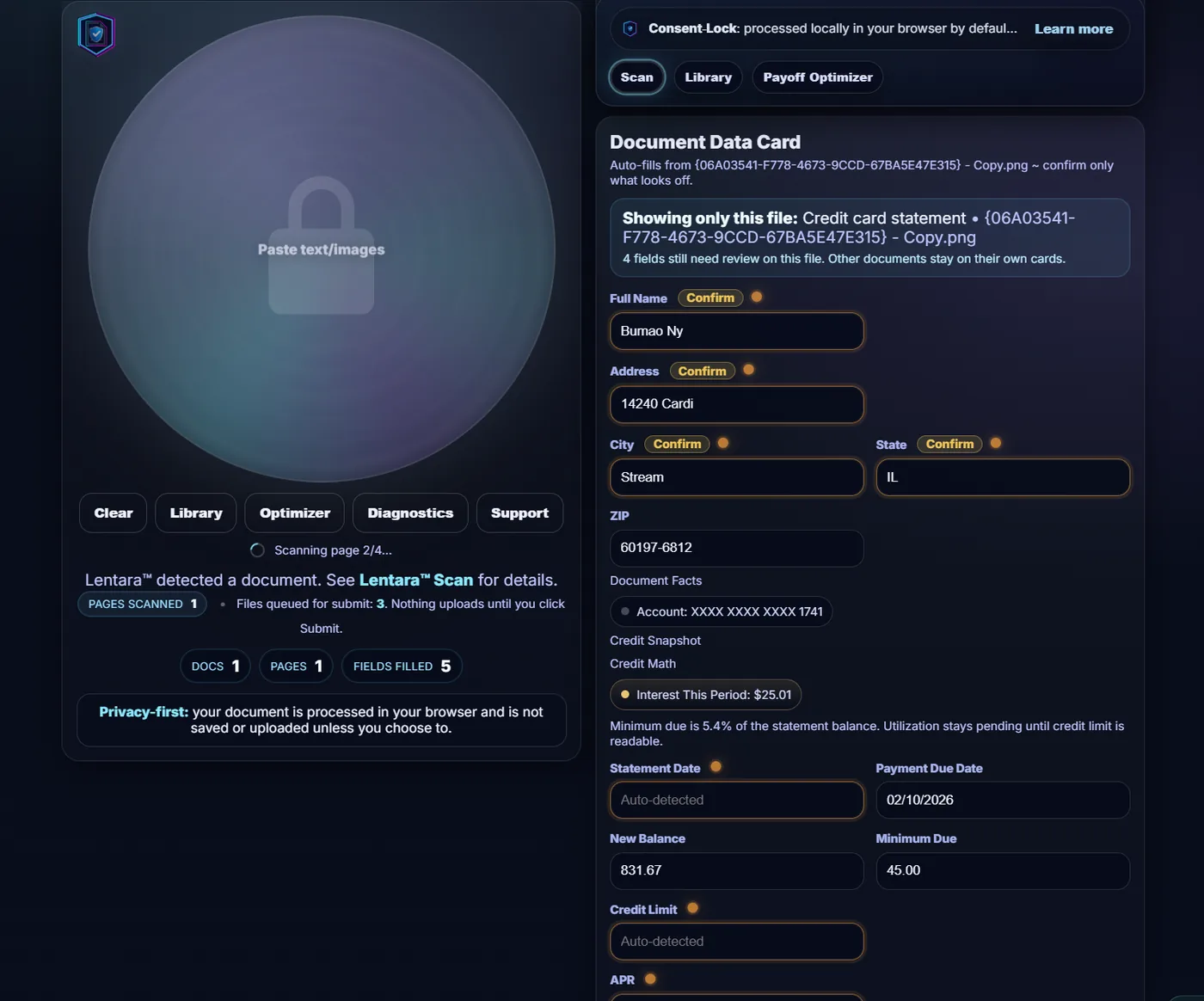
The public lane can scan, extract, and preview next steps locally. That makes the eventual business conversation stronger because the product already proved something useful.
The product is not being designed in a vacuum. FormHaven is the working lane that proves which document flows deserve to become stable software.
More document-prep flows can move in-house over time, including tax-prep-oriented lanes on a smaller scale as the logic becomes reliable enough to support them.
FormHaven is the proving ground, but the point is bigger than one company. Lentara's stable shell can carry the same operating rhythm into other industries as packs mature.
That is why this page exists: to show buyers and evaluators how the public lane, FormHaven service work, and company software story connect without confusing public visitors.
As AI adds more extraction, recommendations, and automation, the human side of the workflow needs a calmer surface. Lentara keeps status, gaps, supporting evidence, and next actions in one operating layer instead of scattering them across tabs.
The interface is designed to show more useful context in less space without taking away the person's bearings.
Status, gaps, evidence, and next actions belong together like a cockpit, not scattered across tabs, drawers, and disconnected pages.
Low glare, professional calm, and focus-minded contrast help the product stay usable through long review sessions and dense packet work.
Every chip, pill, and badge must earn its place. If it does not help the next decision, it should not be occupying the screen.
Draft logic turns packet context, missing-item checkpoints, and form structure into guided execution instead of leaving the team at a blank page.
The shell stays familiar while pack logic can expand into tax, medical, insurance, legal, mortgage, compliance, and other document-heavy lanes.
Returns, income proof, debt-support packets, and filing context can all benefit from one calmer shell before a draft, submission, or client handoff begins.
Medical paperwork, benefits documentation, and EHR-adjacent intake flows all need clearer missing-item logic, attachment context, and human-confirmed routing.
Large review environments need a calmer control surface for supporting evidence, routing suggestions, escalation, and document-aware action sequencing.
Legal and lending workflows often live or die on packet completeness. Lentara’s stable shell can support checklist logic, evidence grouping, and the next clean action.
The CRM view should feel like a working room for the case: who the client is, what is verified, what is missing, which documents support it, and where the work moves next.
Likely match, missing count, conflicts, notes, and the next move can appear in one bounded chamber. The team sees enough context to act without losing the room.
The workspace keeps role, active load, strengths, and team identity visible. That matters when document work becomes AI-assisted but still human-confirmed.
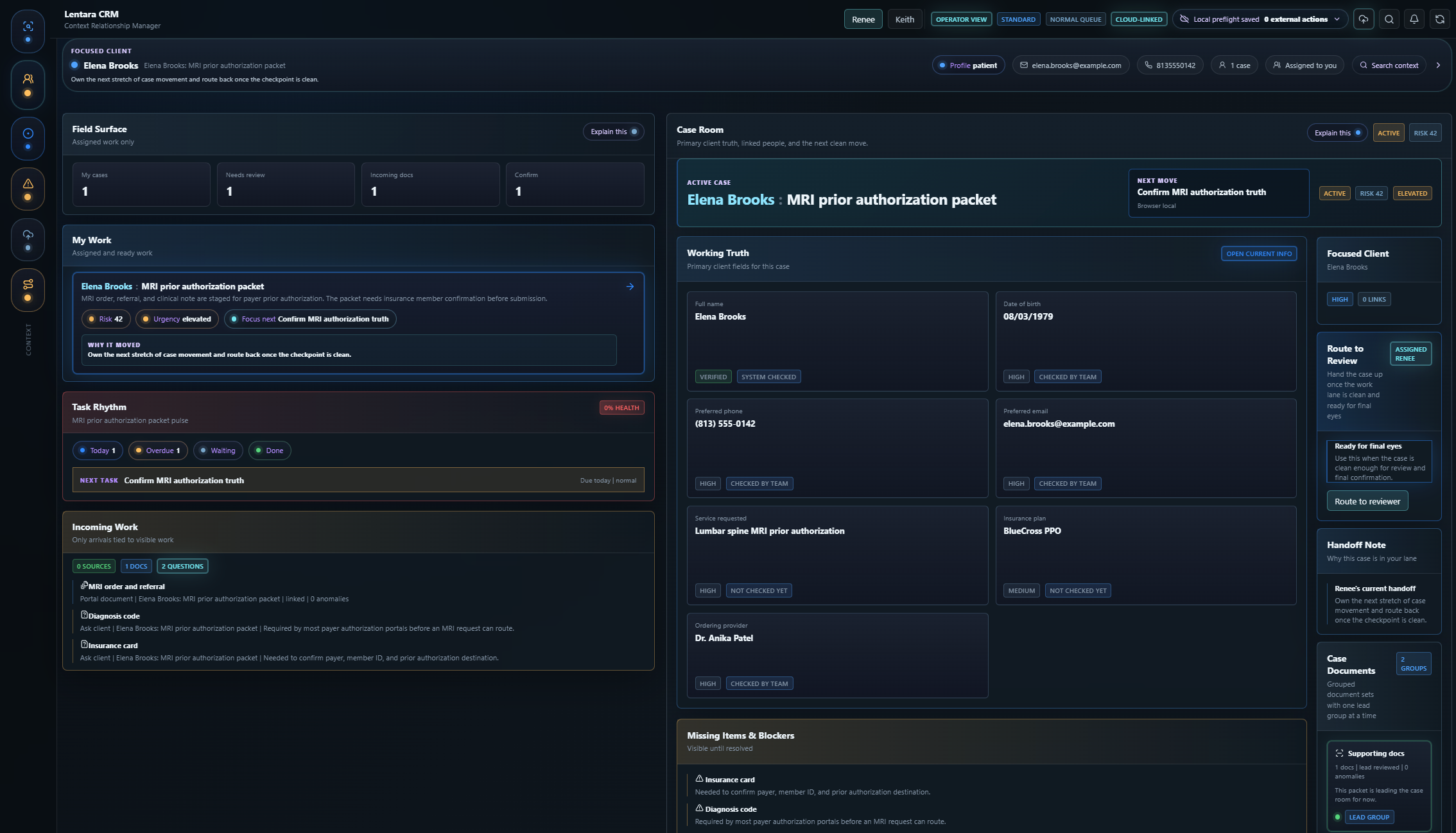
The main CRM room keeps field truth, missing blockers, supporting docs, handoff notes, and case status visible without burying the team.
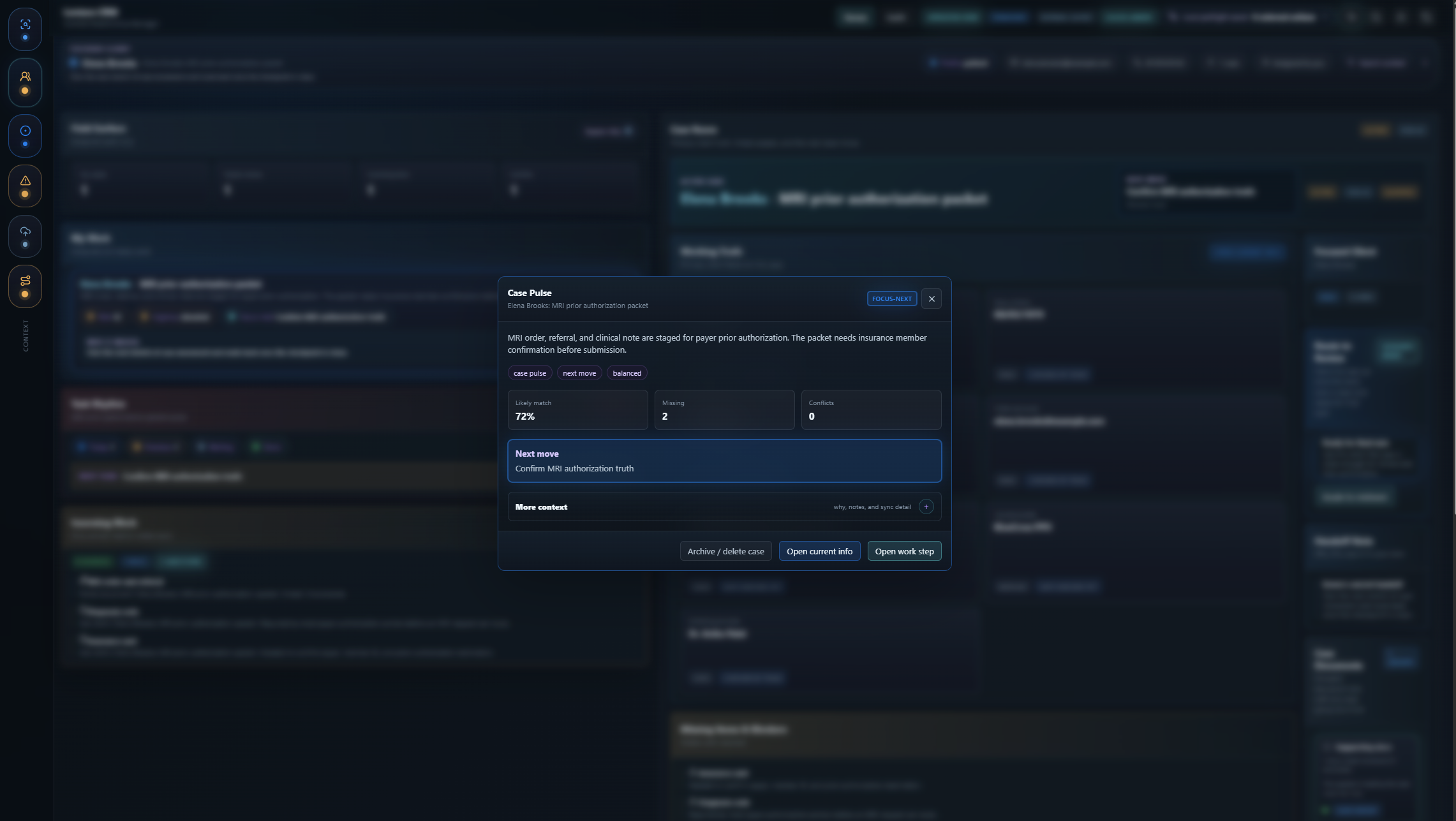
A bounded pulse can show confidence, missing items, conflicts, and the next move while the full room stays in the background.
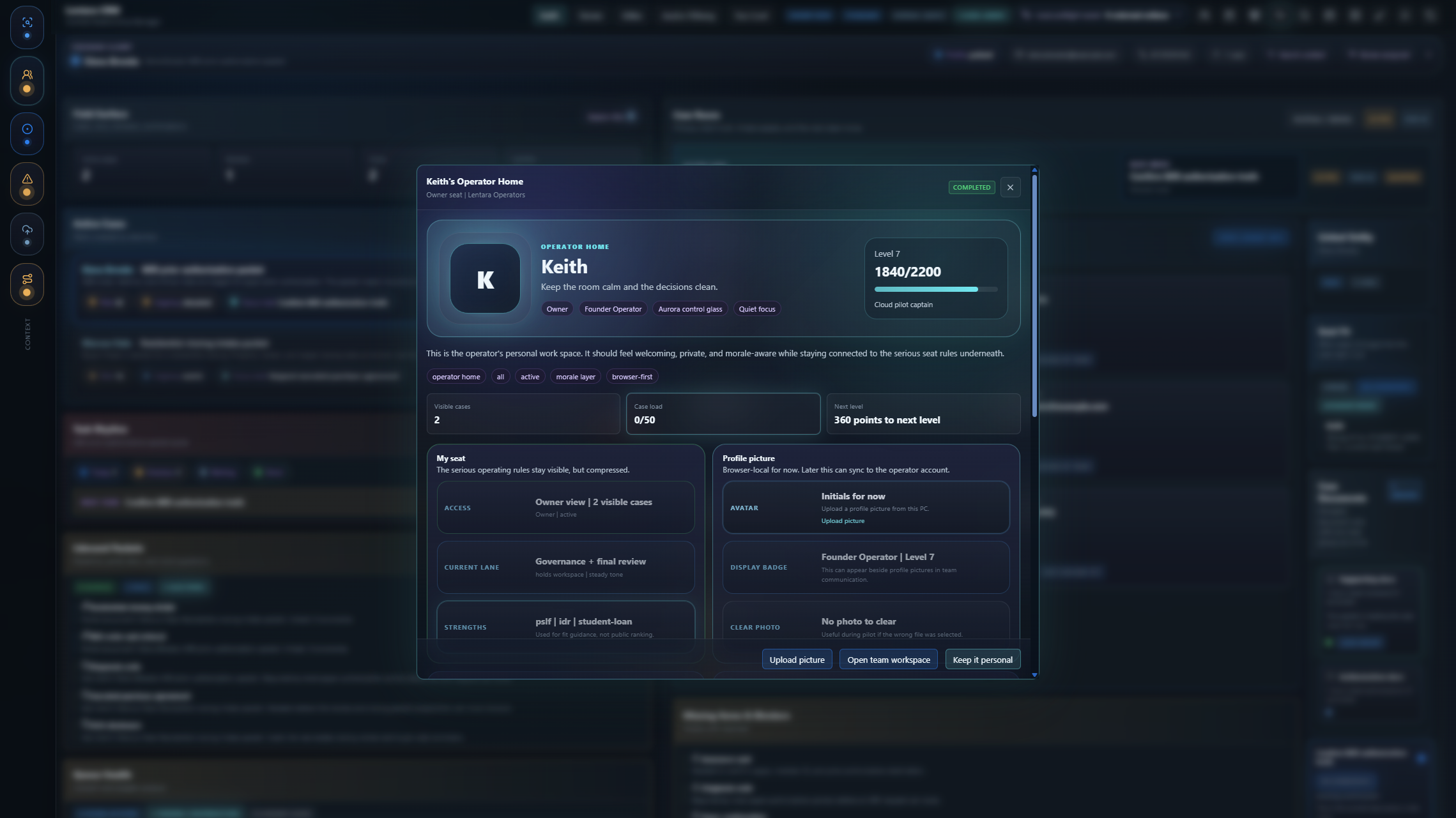
Owner, role, load, strengths, and workspace state become part of the operating surface instead of disappearing into settings.
The signer can see the prepared document, checklist, confidence state, and final review step before the signature happens. That keeps the signature connected to the facts behind the packet.
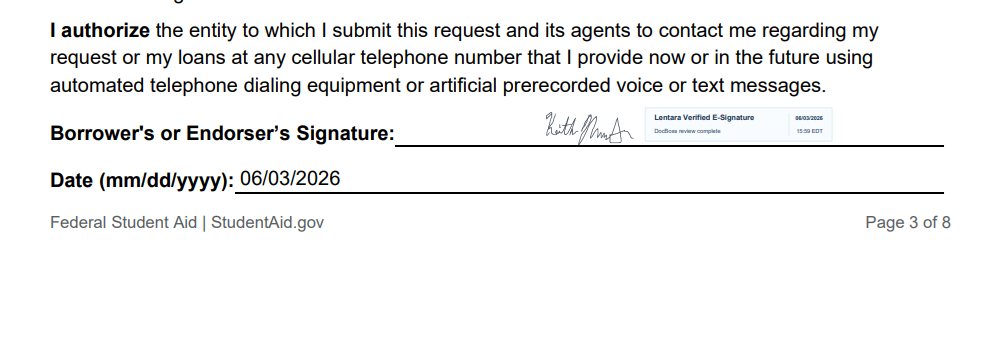
The signing overlay keeps consent language, signature preview, session mark, and final submit action together instead of treating the document like a loose upload.
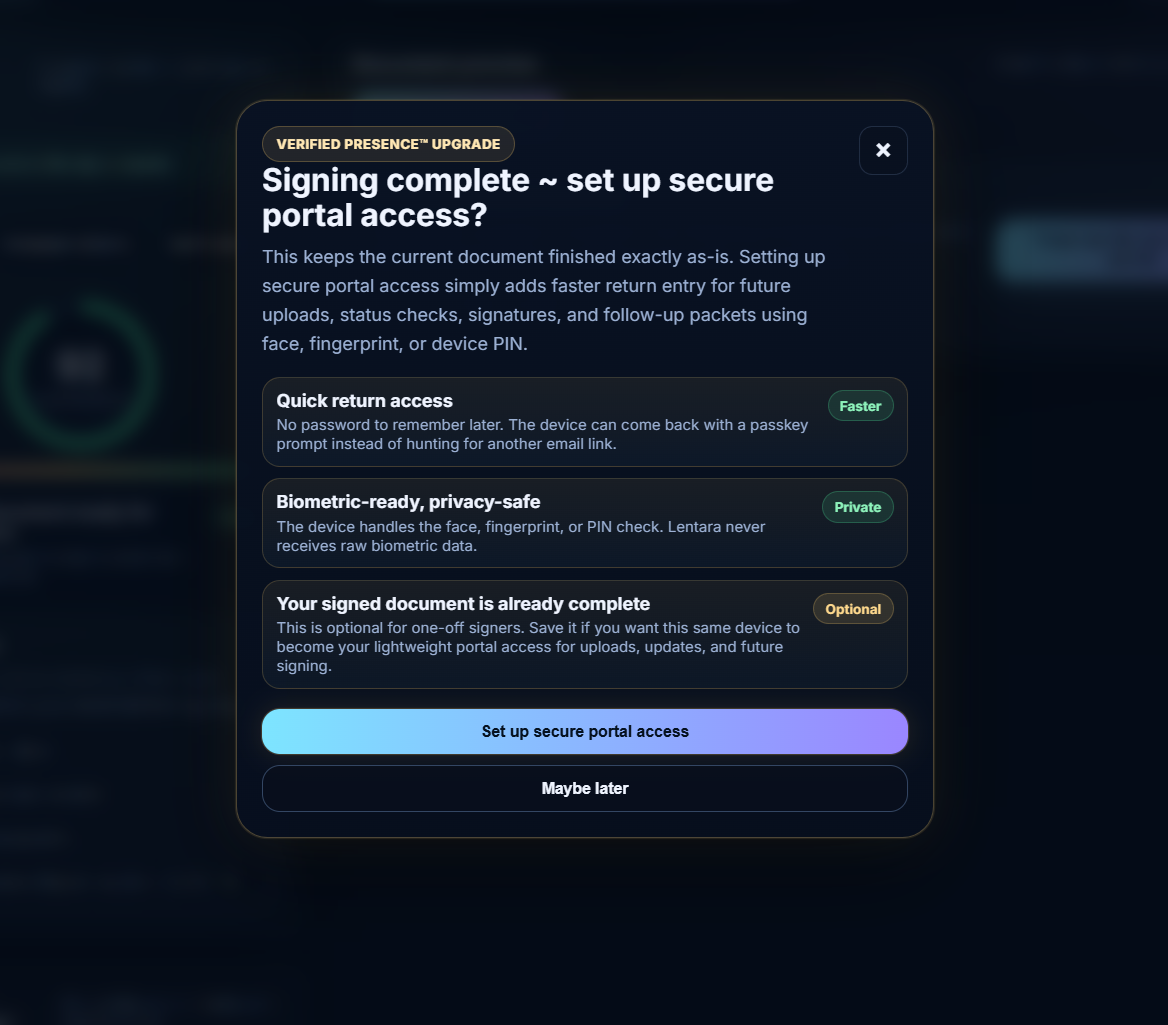
Instead of asking every client to create another account, the portal can use secure links now and passkey-style device checks as that layer matures. The device handles face, fingerprint, or PIN checks; Lentara does not receive raw biometric data.
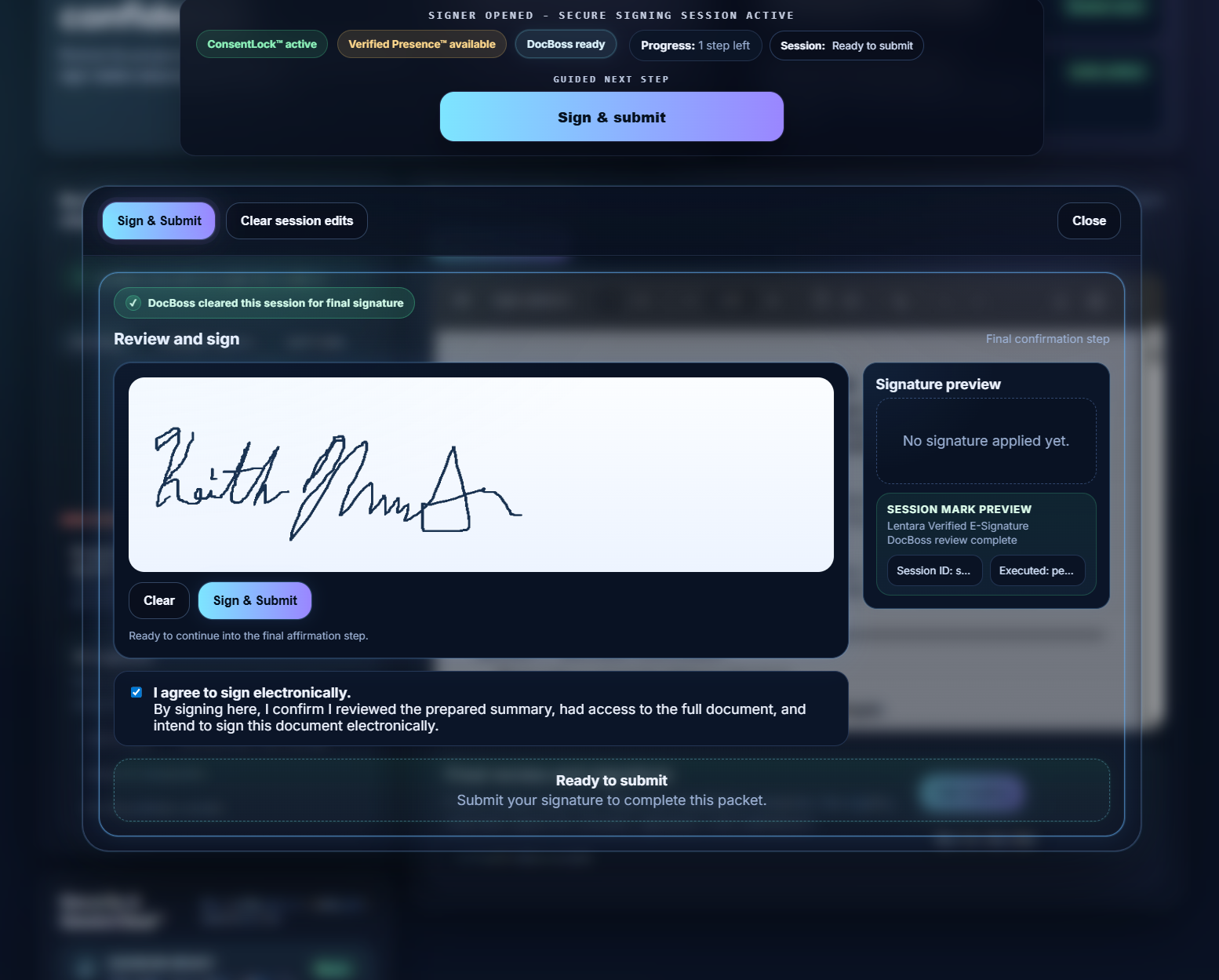
DocBoss readiness, checklist state, document preview, and the final signing path stay in one calm chamber.
The signer sees the signature, agreement language, session mark, and final submit path together.
For future updates, uploads, status checks, and follow-up packets, return access can become quick, private, and device-friendly.
Blueprint Studio is the company-side answer to the bigger Lentara promise: documents should do more of the work. The system learns what fields matter, how readiness is judged, and which execution lane should fire only after a human confirms it.
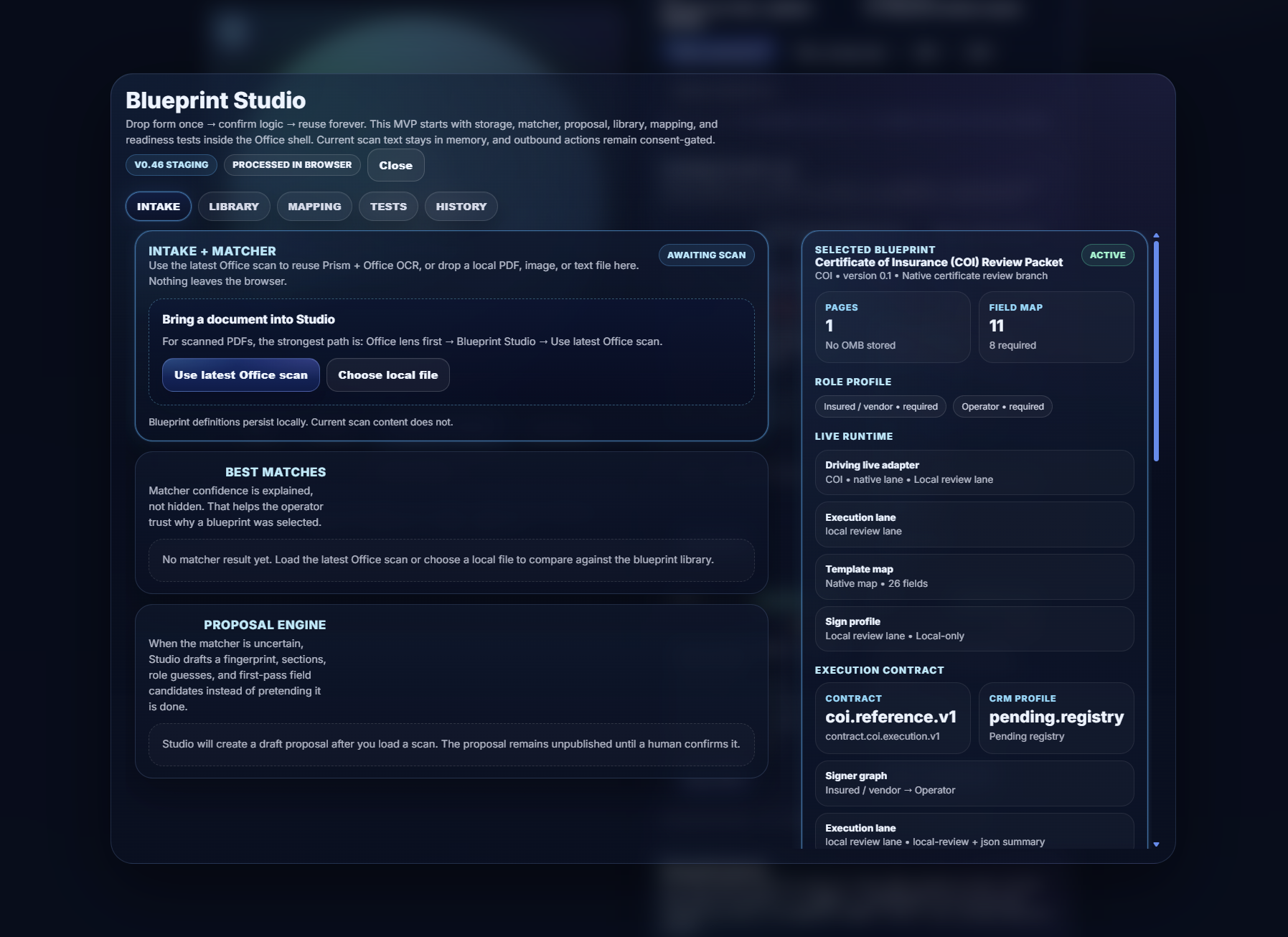
The studio view shows the field map, role profile, runtime lane, and execution contract that turns one packet type into repeatable software behavior.
The clearest conversation starts with the documents your team already handles: what comes in, what needs to be extracted, which fields need confirmation, who signs, and where the finished packet goes.